the aRT OF THE ESSAY
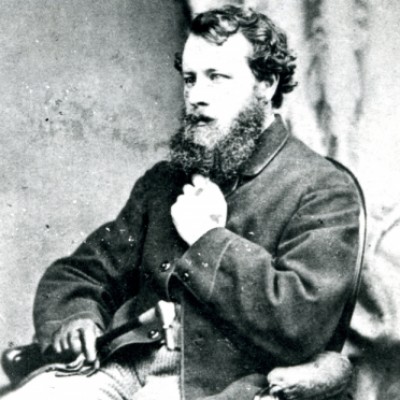
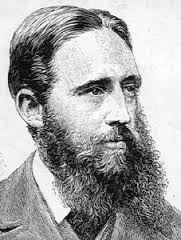
Noble argued in The Yellow Book that Alexander Smith belongs in the company of literary lions and contemporaries such as Robert Louis Stevenson and Richard Le Gallienne, because “Their essays are what the essay in its purest form always tends to be – the prose analogue of the song of self-expression, with its explicit, or implicit autobiography, that touches us as we are never touched by external splendours of epic or drama.”
Alexander Smith on the art of the essay:
“The essay, as a literary form, resembles the lyric, in so far as it is moulded by some central mood – whimsical, serious or satirical. Give the mood, and the essay, from the first sentence to the last, grows around it as the cocoon grows around the silkworm. The essay-writer is a chartered libertine, and a law unto himself. A quick ear and eye, an ability to discern the infinite suggestiveness of common things, a brooding meditative spirit, are all that the essayist requires to start business with.” In short, “The essayist is a kind of poet in prose … The essay should be pure literature as the poem is pure literature.”
The influence of richard jefferies
Before long, Thomas tells us, “I had begun to write accounts of my walks in an approach as near as possible to the style of Jefferies. […] I won a botany book as a prize at the Sunday School with one essay of this kind.”
Edward Thomas
the mentor
Given that the eighteen year-old Thomas had developed a new scientific style of reportage, where had it come from? Not from Noble, whose style, as we shall see, was much more prolix; but almost certainly through Noble. Until now, students of Edward Thomas have relied too heavily on Helen’s portrayal of her father as a run-of-the-mill jobbing journalist. Helen was writing about her husband and her relationship with him, not the father who had died thirty years earlier, who had been absent in London during her early childhood and seriously ill on his return. Helen was not present during Edward’s sessions with her father and seems unaware of Ashcroft Noble’s literary standing late in his career.
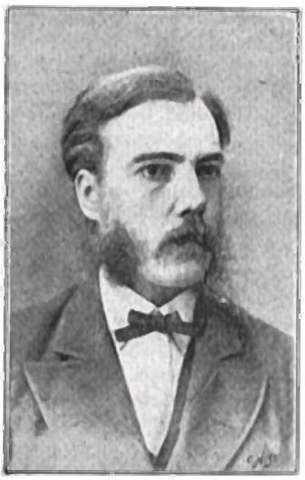
James Ashcroft Noble
“We do not think there will be much difference of opinion,’ wrote Mr James Ashcroft Noble, the accomplished critic of the Manchester Examiner, himself a poet, ‘concerning the poetical quality of this dainty little volume, and there can be no difference whatever concerning the artistic quality of its external appearance. […] The tiny tome is one which will charm the connoisseur who buys his books simply to gaze at and fondle them.

 Monography